

Look around any café or on the subway and you’ll see the same hunched-over heads staring into a rectangle. For nearly two decades, the smartphone has been our portal to the digital world – with very few credible alternatives. But Qi Pan, Snapchat’s director of computer vision, thinks that time is nearly over. “Until now, the phone has been pretty limiting,” he says. “You’re still trapped behind this tiny screen. You have to look at everything through a rectangle.”
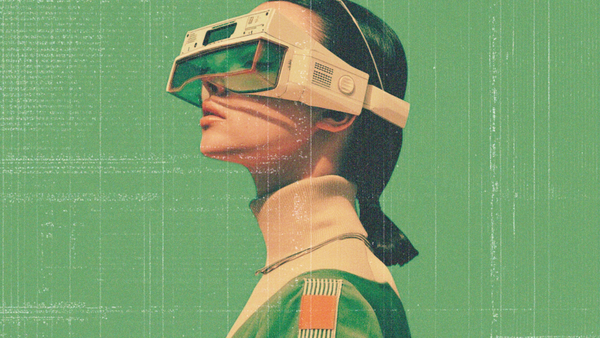
Snap’s long-term vision is simple and radical: glasses replace smartphones. “This is a shift in the future paradigm. This is not like a certain subset of the population will start to use these. Consumers will just use them instead of looking down on their phone,” Qi says.
Snap isn’t alone. Big tech is placing its bets on glass, not screens, as the future of consumer tech. Meta, Apple and Google have all laid out their visions for a screenless era.
When I caught up with Qi, I was given a sneak peek of developer‑ready Snapchat lenses – soon to be tested and iterated before consumers get their hands on a pair. In my demo, I tried the real‑time translation feature: a Snap engineer spoke to me in Spanish while English captions appeared in my lens. I wandered the room asking for info on the author of a book on a shelf and plant care instructions for a cheese plant in the corner.