
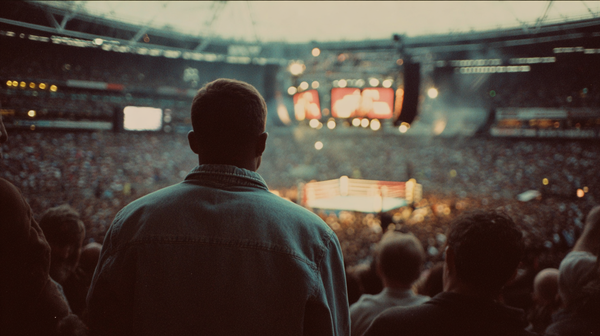
Recently I watched the Fury vs. Makmudov fight on Netflix. I’m a fighting fan and although one of the main reasons for watching was to see the return of the Gypsy King, I was also curious to see how Netflix’s first UK boxing event landed and how they’re starting to build an identity in this space.
What stood out to me was how the event showed Netflix using boxing as a kind of “live billboard” for its wider IP and ecosystem. I guess that’s the point, but it also raises a bigger question: what does this actually mean for brands?
Netflix has been disciplined in how it approaches live sport. Rather than chasing big, expensive rights deals, it’s focused on more contained, high-impact events that generate attention without the burden of year-round programming, things like the MVP/Jake Paul productions.
That approach leans into one-off moments and selective properties like WWE as efficient ways to drive subscriptions, especially when they have global appeal.
And it’s a model that increasingly aligns with how attention works today. As Michael Isaacs-Olaye, vp sales & partnerships at an ad-effectiveness platform Happydemics, tells me, Netflix’s tentpole approach to live sport “speaks directly to the attention economy – shifting brands away from always-on sponsorship towards high-impact, must-win moments.”